Last updated: February 10, 2026
Outliers vs Talent is Overrated: Head to Head Comparison
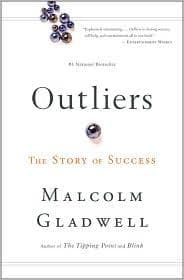
Outliers
by Malcolm Gladwell
💡 We earn from qualifying purchases. Learn more
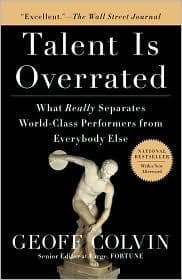
Talent is Overrated
by Geoff Colvin
💡 We earn from qualifying purchases. Learn more
Quick Comparison
| Feature | Outliers | Talent is Overrated |
|---|---|---|
| Main Focus | How circumstances, timing, and culture create success | How deliberate practice creates exceptional performance |
| Core Thesis | Success = talent + 10,000 hours + opportunity + luck | Deliberate practice, not innate talent, creates greatness |
| Emphasis | External factors: when you were born, where, cultural legacy | Internal factors: how you practice and what type of practice |
| The 10,000-Hour Rule | Popularized it—10,000 hours of practice needed for mastery | Clarifies it—it's not just hours, it's deliberate practice |
| Writing Style | Narrative, story-driven, journalistic | Research-focused, practical, prescriptive |
| Best For | Understanding how context shapes success stories | Learning how to actually improve your performance |
| Page Count | 309 pages | 240 pages |
| Published | 2008 | 2008 |
| Feature | Outliers | Talent is Overrated |
|---|---|---|
| Main Focus | How circumstances, timing, and culture create success | How deliberate practice creates exceptional performance |
| Core Thesis | Success = talent + 10,000 hours + opportunity + luck | Deliberate practice, not innate talent, creates greatness |
| Emphasis | External factors: when you were born, where, cultural legacy | Internal factors: how you practice and what type of practice |
| The 10,000-Hour Rule | Popularized it—10,000 hours of practice needed for mastery | Clarifies it—it's not just hours, it's deliberate practice |
| Writing Style | Narrative, story-driven, journalistic | Research-focused, practical, prescriptive |
| Best For | Understanding how context shapes success stories | Learning how to actually improve your performance |
| Page Count | 309 pages | 240 pages |
| Published | 2008 | 2008 |
Strengths & Weaknesses
Outliers
✓ Strengths
- ✓The 10,000 hour rule backed by Beatles and Bill Gates examples shows practice beats innate talent for mastery
- ✓Birthday cutoff analysis proving hockey stars are born in January reveals hidden advantages we ignore
- ✓Cultural legacy chapters on plane crashes and rice farming show how background shapes success invisibly
- ✓Gladwell's storytelling makes sociology research feel like page turning narrative instead of dry statistics
✗ Weaknesses
- ✗The 10,000 hour rule oversimplifies expertise research and ignores quality of practice versus just time
- ✗Some examples feel cherry picked to support the thesis while downplaying contradictory evidence
- ✗The deterministic view that circumstances create success can discourage individual agency and effort
Talent is Overrated
✓ Strengths
- ✓Deliberate practice framework of immediate feedback and uncomfortable challenge explains how to improve not just clock hours
- ✓Colvin proves talent myths wrong by showing Mozart and Tiger Woods succeeded through designed practice not gifts
- ✓The performance improvement techniques work for business skills not just sports and music
- ✓Focus on what great performers actually do differently gives you actionable steps versus vague talent explanations
✗ Weaknesses
- ✗The relentless focus on deliberate practice can feel exhausting and joyless compared to intrinsic motivation
- ✗Some readers find the anti talent argument too extreme given obvious physical and cognitive differences
- ✗Limited discussion of when natural limits actually exist despite perfect practice conditions
Memorable Quotes
Outliers
💭 "Practice isn't the thing you do once you're good. It's the thing you do that makes you good."
💭 "It is not the brightest who succeed. Nor is success simply the sum of the decisions and efforts we make on our own behalf. It is, rather, a gift. Outliers are those who have been given opportunities—and who have had the strength and presence of mind to seize them."
💭 "The people at the very top don't work just harder or even much harder than everyone else. They work much, much harder."
💭 "Achievement is talent plus preparation."
💭 "No one—not rock stars, not professional athletes, not software billionaires, and not even geniuses—ever makes it alone."
💭 "The lesson here is very simple. But it is striking how often it is overlooked. We are so caught in the myths of the best and the brightest and the self-made that we think outliers spring naturally from the earth."
💭 "Who we are cannot be separated from where we're from."
Talent is Overrated
💭 "The evidence offers no support for the notion that people are held back by a lack of innate ability."
💭 "Deliberate practice is characterized by several elements, each worth examining. It is activity designed specifically to improve performance, often with a teacher's help."
💭 "Great performance is in our hands far more than most of us ever suspected."
💭 "What we believe about talent is important because our beliefs affect our decisions."
💭 "The most important effect of genes on performance is indirect. That is, genetic effects work through our predispositions."
💭 "The reality that deliberate practice is hard can even be seen as good news. It means that most people won't do it. So your willingness to do it will distinguish you all the more."
💭 "The best performers observe themselves closely. They are in effect able to step outside themselves, monitor what is happening, and adjust as they go."
Why Read This?
Outliers
- •Understand why timing, culture, and opportunity shape success as much as talent
- •Get unforgettable stories that change how you think about achievement
- •See why the 'self-made person' myth is incomplete
- •Perfect for understanding the bigger picture of how success happens
- •Malcolm Gladwell's storytelling makes complex ideas accessible and memorable
- •Essential for thinking about meritocracy and structural advantages
Talent is Overrated
- •Learn exactly how to practice to achieve world-class performance
- •Understand what 'deliberate practice' actually means (not just repetition)
- •Get actionable principles you can apply to any skill
- •See the research behind why talent is less important than we think
- •Perfect for people who want to dramatically improve their performance
- •More scientifically rigorous than Outliers—builds on Anders Ericsson's work
🏆 The Verdict
These books serve different purposes. Outliers (98,000 ratings at 4.6 stars) wins for understanding success from a sociological perspective—how context, timing, and opportunity create outliers. The Beatles in Hamburg, Bill Gates at Lakeside School, Canadian hockey birth dates are unforgettable stories. Talent is Overrated (6,800 ratings at 4.5 stars) wins for actually improving your own performance—it teaches deliberate practice with four elements: designed to improve, repeatable, immediate feedback, mentally demanding. Gladwell makes you think differently about success; Colvin makes you perform differently.
Read Outliers first if you want to understand the big picture of how success happens and why context matters hugely. Gladwell's storytelling is unmatched—the Beatles accumulating 10,000 hours in Hamburg strip clubs (1960-1962), Bill Gates getting unlimited computer access in 1968 when universities didn't have computers, Korean Air crashes caused by hierarchical culture, rice paddy farming training Asian math superiority. You'll never see success the same way. The 10,000-hour rule became cultural shorthand (even though oversimplified), and the book challenges meritocracy myths brilliantly. But it's less actionable—you can't change your birth year or cultural legacy. Then read Talent is Overrated if you want to actually improve your performance with actionable framework. Colvin builds on Anders Ericsson's research explaining deliberate practice: (1) designed to improve performance, (2) repeatable extensively, (3) continuous feedback, (4) mentally demanding. Tiger Woods practicing 4-foot putts for hours with technique adjustments, Jerry Rice running routes with precision, Mozart trained by Leopold from age 3—that's deliberate practice, not casual repetition. It's less engaging than Gladwell (6,800 versus 98,000 ratings) but more scientifically rigorous and practical. Together they're complete: Outliers shows you opportunity matters, Talent is Overrated shows you what to do with opportunity. If you only read one, choose Outliers for inspiring narrative that changes how you think about achievement, or Talent is Overrated for practical guidance on improving performance. Most people will prefer Outliers' storytelling, but serious learners need Colvin's rigor.
You Might Also Like
More comparisons in this category to help you make the right choice
Explore More Comparisons
Browse all our book comparisons across different genres
All ComparisonsExplore comparisons by category: Psychology & Human Behavior and more
Browse CategoriesHave a comparison request? We'd love to hear from you!
Request Comparison