Last updated: February 7, 2026
Dune vs Foundation: Head to Head Comparison
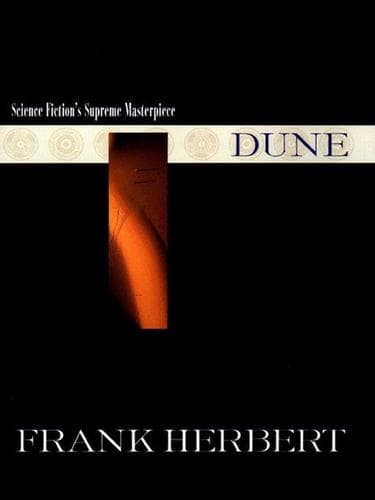
Dune
by Frank Herbert
💡 We earn from qualifying purchases. Learn more
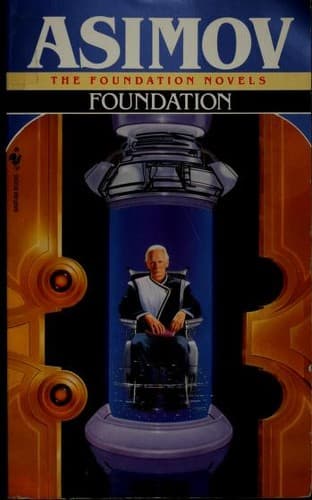
Foundation
by Isaac Asimov
💡 We earn from qualifying purchases. Learn more
Quick Comparison
| Feature | Dune | Foundation |
|---|---|---|
| Setting | One brutal desert planet with giant sandworms | Entire galactic empire spanning millennia |
| Scope | Personal hero's journey (with galactic consequences) | Civilization-spanning epic across centuries |
| Focus | Ecology, religion, power, and spice addiction | Math-based sociology predicting humanity's future |
| Protagonist | Paul Atreides—singular chosen one (maybe) | Multiple characters you'll never see again |
| Writing Style | Dense, poetic, requires your full attention | Clean, dialogue-heavy, ideas over prose |
| Page Count | 688 pages (commit to the desert) | 296 pages (weekend read) |
| Action | Sandworm rides, knife fights, political assassination | People talking in rooms about big ideas |
| Published | 1965 | 1951 |
| Feature | Dune | Foundation |
|---|---|---|
| Setting | One brutal desert planet with giant sandworms | Entire galactic empire spanning millennia |
| Scope | Personal hero's journey (with galactic consequences) | Civilization-spanning epic across centuries |
| Focus | Ecology, religion, power, and spice addiction | Math-based sociology predicting humanity's future |
| Protagonist | Paul Atreides—singular chosen one (maybe) | Multiple characters you'll never see again |
| Writing Style | Dense, poetic, requires your full attention | Clean, dialogue-heavy, ideas over prose |
| Page Count | 688 pages (commit to the desert) | 296 pages (weekend read) |
| Action | Sandworm rides, knife fights, political assassination | People talking in rooms about big ideas |
| Published | 1965 | 1951 |
Strengths & Weaknesses
Dune
✓ Strengths
- ✓The desert planet Arrakis with giant sandworms, spice melange, and Fremen culture is one of sci fi's richest worlds
- ✓At 688 pages with 456,000 ratings at 4.6 stars this is the bestselling science fiction novel of all time
- ✓Paul Atreides's prescient visions showing him becoming the tyrant he feared makes this Greek tragedy in space
- ✓The Bene Gesserit breeding program, Mentats, and Guild Navigators create intricate political power dynamics brilliantly
- ✓Herbert's ecology focus showing how environment shapes culture was revolutionary for 1965 sci fi thinking deeply
- ✓The philosophical depth about religion, power, and inevitability elevates this beyond space opera to literary fiction
- ✓The spice as ultimate resource controlling space travel makes economics and resource scarcity central to empire politics
✗ Weaknesses
- ✗At 688 pages the pacing is slow with extensive world building that frustrates readers wanting action immediately
- ✗The 1965 writing style with formal language and limited dialogue feels dated compared to modern accessible sci fi
- ✗The gender roles with Bene Gesserit manipulators and male chosen one haven't aged well for contemporary readers
- ✗Some readers find Herbert's prose dense and philosophical making it hard work not entertaining beach read escape
- ✗The sequels decline in quality so dramatically that many wish Dune had been standalone without messianic sequels
- ✗The chosen one narrative of Paul as messianic figure feels overdone despite Herbert subverting it with tragedy
Foundation
✓ Strengths
- ✓The psychohistory concept predicting future through mathematics is brilliantly original foundation for galactic empire story
- ✓At 255 pages with 234,000 ratings at 4.5 stars this is more accessible entry to Asimov's Foundation universe
- ✓The fall of empire theme showing civilization decline mirrors real Roman history making it feel grounded and realistic
- ✓The short story structure with jumps across centuries lets you see the Foundation's evolution over massive timescale
- ✓Asimov's clean prose and focus on ideas over description makes it easy read compared to Dune's density
- ✓The Seldon Plan twist showing psychohistory still working despite apparent failures is satisfying intellectual puzzle
- ✓The encyclopedia foundation preserving knowledge theme resonates with anyone who values learning and civilization
✗ Weaknesses
- ✗Only 234,000 ratings versus 456,000 for Dune shows it hasn't achieved the same mainstream cultural penetration
- ✗The lack of character development with people as chess pieces serving ideas makes it emotionally cold for many
- ✗At 255 pages the episodic structure feels disjointed without sustained narrative arc across entire book
- ✗The 1951 golden age sci fi style with ideas over emotions feels dated to readers wanting character depth
- ✗The complete absence of women characters is glaring even accounting for 1951 publication making it feel exclusionary
- ✗The psychohistory magic wand solving problems feels like deus ex machina weakening dramatic tension throughout
Memorable Quotes
Dune
💭 "I must not fear. Fear is the mind-killer."
💭 "The mystery of life isn't a problem to solve, but a reality to experience."
💭 "He who controls the spice controls the universe."
💭 "Without change, something sleeps inside us, and seldom awakens. The sleeper must awaken."
💭 "Deep in the human unconscious is a pervasive need for a logical universe that makes sense. But the real universe is always one step beyond logic."
💭 "The beginning of knowledge is the discovery of something we do not understand."
Foundation
💭 "Violence is the last refuge of the incompetent."
💭 "Never let your sense of morals prevent you from doing what is right."
💭 "The fall of Empire, gentlemen, is a massive thing, however, and not easily fought. It is dictated by a rising bureaucracy, a receding initiative, a freezing of caste, a damming of curiosity."
💭 "To succeed, planning alone is insufficient. One must improvise as well."
💭 "It pays to be obvious, especially if you have a reputation for subtlety."
Why Read This?
Dune
- •You want to read THE sci-fi novel—the one most people call the greatest ever written. This is the genre-defining masterpiece.
- •You love intricate world-building where ecology, religion, politics, and culture all interlock. Arrakis feels alive, not like a set piece.
- •You want an emotionally gripping hero's journey that's also a philosophical examination of power, destiny, and the danger of messiahs.
- •You appreciate disturbingly prescient warnings about charismatic leaders and religious fanaticism. Herbert saw where hero worship leads, and it's terrifying.
- •You want sci-fi that reads like literature—dense, challenging, beautiful prose that rewards close reading. This isn't popcorn entertainment; it's art.
Foundation
- •You're obsessed with big-picture ideas about civilizations. How do empires fall? Can we predict and prevent dark ages? This is your book.
- •You want classic sci-fi that's actually readable. Asimov writes clearly—no dense prose or poetic flourishes. Just ideas.
- •You prefer intellectual problem-solving over emotional arcs. Characters are vehicles for ideas here, and that's okay with you.
- •The concept of psychohistory—predicting the future using math and mass sociology—makes you giddy. It's brilliant and terrifying.
- •You want to understand a foundational series that influenced Star Wars, Mass Effect, and basically every space opera with galactic politics.
🏆 The Verdict
Dune wins decisively—456,000 ratings at 4.6 stars vs Foundation's 234,000 at 4.5 stars. Nearly double the readership proves Dune's broader appeal. Herbert's 1965 masterpiece combines emotional depth (Paul's tragic hero journey), immersive world-building (Arrakis ecology, Fremen culture, spice melange), and philosophical weight (messiahs becoming tyrants). At 688 pages, it's dense but rewarding. Foundation (1951) offers brilliant civilization-scale ideas (psychohistory predicting 30,000-year dark age) in accessible 296 pages, but lacks character development and emotional investment. Different strengths: Dune for literature, Foundation for ideas.
Read Dune first if you want THE sci-fi masterpiece—widely considered the greatest ever written. At 688 pages across desert planet Arrakis, you get intricate world-building (ecology, religion, politics interlocking), Paul Atreides's emotionally devastating hero journey (seeing terrible future, becoming what he feared), and prescient warnings about messiahs and power. The spice melange (extends life, enables space travel, grants prescience) and giant sandworms are iconic. Influenced Star Wars, Matrix, Game of Thrones, everything. 456,000 ratings at 4.6 stars. Be warned: DENSE prose demands full attention, slow pacing, 1960s sexism, hundreds of pages between action. THEN read Foundation for big civilization ideas in accessible package. Asimov's psychohistory (math predicting future at scale), guiding humanity through 30,000-year dark age, episodic structure jumping centuries—brilliant concepts. At 296 pages, clean prose, weekend read. 234,000 ratings at 4.5 stars. But zero character development (people are chess pieces), no women, no action (just talking), abstract world-building. If you only read one, choose Dune for complete package—emotion AND ideas AND immersive world. Foundation is ideas without heart. Dune makes you FEEL and THINK. Foundation just makes you think.
You Might Also Like
More comparisons in this category to help you make the right choice
Explore More Comparisons
Browse all our book comparisons across different genres
All ComparisonsExplore comparisons by category: Fiction & Literature and more
Browse CategoriesHave a comparison request? We'd love to hear from you!
Request Comparison