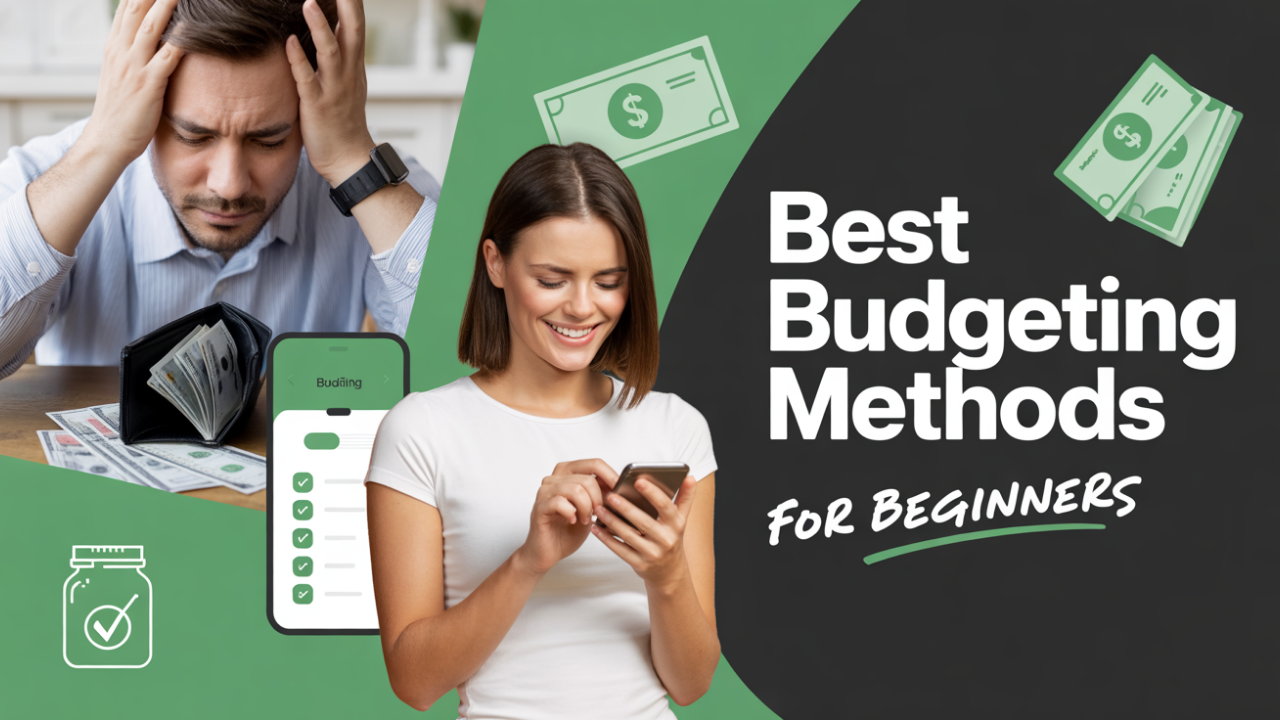
The best budgeting methods for beginners aren’t complicated, they’re just different for everyone. I’ve seen too many people try to force themselves into budgeting systems that don’t fit their lives. They last maybe two weeks before giving up completely.
The truth is there’s no one-size-fits-all approach to budgeting. The best method is the one you’ll actually stick with.
I will break down the 5 most effective budgeting methods for beginners. You’ll learn how each one works, who it’s perfect for, and most importantly, which mistakes to avoid that trip up 8 out of 10 new budgeters.
Why Budgeting Methods for Beginners Matter More in 2026
The average American household spent $77,280 in 2023 (U.S. Bureau of Labor Statistics’ (BLS)), a 51% increase from just ten years ago. Your parents’ budgeting advice doesn’t work anymore because the game has changed.
Only 16% of adults have enough emergency savings to cover three to five months of living expenses, while 27% have no emergency savings at all. That’s terrifying when you think about it. One car breakdown, one medical bill, one unexpected anything, and millions of people are in serious trouble.
3 Essential Steps Before Choosing Your Budgeting Method
1. Calculate Your Real Income
Don’t use your salary. Use your take-home pay after taxes, health insurance, and 401(k) contributions.
If you freelance or have irregular income, look at your lowest-earning month from the past six months. Budget based on that. Anything extra becomes bonus money.
2. Track Your Spending for Two Weeks
You can’t fix what you don’t see. Before choosing a budgeting method, spend two weeks writing down every purchase. Every coffee. Every subscription. Every impulse Amazon orders.
Use your bank app, a notes file, or grab receipts. Just track it. You’ll be shocked where your money actually goes.
3. Separate Needs from Wants
Your Netflix subscription is not a need. Your daily $7 latte is not a need.
Needs are things you’d be in immediate trouble without: rent, utilities, groceries, transportation to work, minimum debt payments. Everything else is a want, no matter how much you love it.
The 5 Best Budgeting Methods for Beginners (Ranked by Success Rate)
Method #1: The 50/30/20 Rule
Divide your after-tax income into three buckets.
50% for needs such as rent, utilities, groceries, insurance.
30% for wants like dining out, hobbies, streaming services.
20% for savings and debt payments above minimums.
Perfect for: People who want simplicity without tracking every dollar. You get clear boundaries without the headache.
Real example: Let’s say you bring home $3,500 per month.
- $1,750 for needs
- $1,050 for wants
- $700 for savings/debt
Mistake to avoid: Calling wants “needs.” I’ve seen people justify their $200 cable bill as essential. It’s not. Be ruthless with these categories or the system falls apart.
Method #2: Zero-Based Budgeting
In this method every single dollar gets a job. Your income minus all expenses and savings should equal exactly zero at the end of the month.
You’re not broke, you’ve just assigned everything a purpose before the month starts.
Perfect for: People who like control and don’t mind spending 30 minutes planning each month. Great for anyone serious about crushing debt or reaching big savings goals fast.
Real example: You make $4,000/month.
- Rent: $1,200
- Utilities: $150
- Groceries: $400
- Car payment: $300
- Gas: $150
- Insurance: $200
- Phone: $50
- Emergency fund: $400
- Retirement: $500
- Fun money: $200
- Eating out: $150
- Extra debt payment: $300 Total: $4,000 (Zero left over)
Mistake to avoid: Being too rigid. Life happens. Your car needs new tires. Your friend gets married. Build in a $50-100 “stuff I forgot” category, or you’ll blow the whole budget when reality hits.
Method #3: Pay Yourself First
In this method the second your paycheck hits, automatically move a set percentage to savings. Then spend what’s left on everything else.
This flips traditional budgeting on its head. Instead of saving what’s left over (usually nothing), you save first and adapt your spending.
Perfect for: People who struggle to save consistently. People who find detailed budgeting overwhelming. Anyone who wants to build wealth without thinking about it daily.
Real example: Your $3,000 paycheck arrives on the first. Before you do anything, 15% ($450) automatically transfers to your savings account. You live on the remaining $2,550 for the month.
Mistake to avoid: Setting the percentage too high. Start with 10% if you’re nervous. You can always increase it. But if you set 25% and can’t pay rent, you’ll quit entirely.
Method #4: Envelope Budgeting
This method actually puts cash for different spending categories into physical envelopes. When an envelope’s empty, you stop spending in that category until next month.
Many apps now do “digital envelope” budgeting like Goodbudget or YNAB.
Perfect for: People who overspend with credit cards. Anyone who needs the psychological reality check of physical cash leaving their hands.
Real example: After paying fixed bills online, you withdraw $800 in cash:
- Groceries envelope: $400
- Gas envelope: $150
- Dining out envelope: $100
- Entertainment envelope: $50
- Personal care envelope: $100
When groceries hit zero on the 20th, you’re eating what’s in your pantry until the 1st.
Mistake to avoid: “Borrowing” from other envelopes. The whole point is boundaries. If you keep raiding the gas envelope to buy takeout, you’ve defeated the purpose.
Method #5: The No-Budget Budget
Automate your bills and savings first. Then spend whatever’s left in your checking account without tracking it obsessively.
Perfect for: People who feel suffocated by traditional budgets. High earners who have good instincts but hate spreadsheets.
Real example: All your fixed costs and 15% savings auto-deduct on payday. You’re left with $800 for the month. Spend it however you want, but when your checking account hits zero, you’re done.
Mistake to avoid: This only works if you’ve actually automated everything important first. And if you’re an impulsive spender, this will destroy you.
How to Choose the Best Budgeting Method for Your Lifestyle
Ask yourself these three questions:
1. Do you like details or big picture?
2. Do you overspend on your card?
3. How much time will you commit monthly?
You will get your answer.
The Mistakes That Tank Most Beginners
Forget irregular expenses:
Car insurance doesn’t come every month, but it does come. Christmas happens every year, yet somehow people are surprised by it. Make a list of everything irregular from last year, add it up, divide by 12, and budget that amount monthly.
No emergency fund:
Before you aggressively attack debt or save for a vacation, get $1,000 in an emergency fund. Just $1,000. Then work toward 3-6 months of expenses.
You treat it like it’s permanent:
You got a raise. Your rent increased. You had a kid. Your budget needs to change with your life, or it becomes useless. Review it monthly for the first six months, then quarterly after that.
Being unrealistically strict:
Cutting your restaurant budget from $400 to $0 overnight sounds productive. It’ll last exactly one Friday night when you’re tired and don’t want to cook. Cut by 25-30% max. Drop from $400 to $280 first, master that, then cut more if you want.
Putting It All Together
Your Action Plan is,
-Choose ONE budgeting method from this guide
-Commit to 3 months minimum before switching
-Track your progress weekly for the first month
-Adjust as needed, but don’t quit entirely
Again, perfect budgeting doesn’t exist. Sustainable budgeting does. The method doesn’t matter as much as you think. What matters is consistency. Pick one method. Try it for three months minimum. If it’s truly not working, switch. But give it a real shot first.
Thank you for being with me.
Mehrab Musa, From Asset Stories.